Usain Bolt Training Program: A Comprehensive Overview
Finding reliable Usain Bolt training program PDFs can be challenging‚ as many sources offer incomplete or inaccurate information regarding his methods.
Caution is advised when downloading unverified PDFs‚ prioritizing official sources or those created by certified athletic trainers for optimal results.

Usain Bolt’s unparalleled success wasn’t simply due to natural talent; it stemmed from a meticulously crafted training philosophy centered around maximizing explosive power‚ refining technique‚ and prioritizing recovery. His program wasn’t about relentless‚ grueling workouts‚ but rather a strategic blend of intense sessions interspersed with crucial rest and rehabilitation.
A core tenet of Bolt’s approach was individualization. While a general framework existed‚ his coaches constantly adapted the program based on his body’s response and evolving needs. This involved careful monitoring of performance metrics and a keen understanding of biomechanics. Finding a comprehensive Usain Bolt training program PDF can offer insights‚ but remember these are often generalized representations.
The emphasis wasn’t solely on track work; strength and conditioning played a vital role in building the foundational power necessary for his blistering speed. This holistic approach‚ combined with a dedicated nutrition plan‚ allowed Bolt to consistently perform at the peak of his abilities.
Core Components of Bolt’s Training
Bolt’s training revolved around sprint drills‚ strength & conditioning‚ and flexibility—a trifecta for explosive power and injury prevention‚ as detailed in PDFs.
Sprint Drills: Building Explosive Speed
Usain Bolt’s sprint drills were meticulously designed to enhance his explosive power and refine his running technique‚ often outlined in detailed training PDFs.
These drills included A-skips‚ B-skips‚ and high knees‚ focusing on proper form and maximizing ground contact time—crucial elements for acceleration.
PDF resources frequently highlight the importance of resisted sprinting‚ utilizing sleds or parachutes to build strength and power in the initial phases.
Another key component was flying 30s‚ where Bolt would build speed over 30 meters‚ emphasizing top-end velocity and stride length‚ as shown in training plans.
Furthermore‚ block starts were practiced extensively‚ perfecting reaction time and the initial drive phase—a critical aspect of his 100m dominance.
Analyzing PDFs reveals a consistent emphasis on technique refinement‚ ensuring each drill contributed to efficient and powerful sprinting mechanics.
Strength and Conditioning: Power Development
Usain Bolt’s strength and conditioning program‚ often detailed in training PDFs‚ was fundamental to developing the raw power needed for explosive sprinting.

Key exercises included squats‚ deadlifts‚ and lunges‚ building lower body strength and enhancing his ability to generate force against resistance.
PDFs emphasize the importance of Olympic lifts – cleans and snatches – to improve power output and rate of force development‚ crucial for acceleration.
Core work was also prioritized‚ with exercises like planks and Russian twists strengthening his core for efficient power transfer during each stride.
The program wasn’t solely focused on maximal strength; explosive movements like plyometrics were integrated to translate strength into speed.
Training PDFs often illustrate a periodized approach‚ varying intensity and volume throughout the season to optimize performance and prevent injury.
Flexibility and Mobility: Injury Prevention & Range of Motion
Usain Bolt’s training PDFs consistently highlight the crucial role of flexibility and mobility in his success‚ extending beyond simply preventing injuries.
Dynamic stretching‚ performed before workouts‚ prepared his muscles for explosive movements‚ increasing blood flow and range of motion.
Static stretching‚ implemented post-training‚ aided recovery and improved flexibility‚ reducing muscle soreness and stiffness.
Mobility drills‚ targeting hips‚ ankles‚ and thoracic spine‚ were essential for maintaining optimal biomechanics and efficient stride length.
PDFs detail foam rolling and massage as integral components‚ releasing muscle tension and improving tissue quality.
A comprehensive approach ensured Bolt maintained a full range of motion‚ maximizing power output and minimizing the risk of strains or tears.
Weekly Training Schedule Breakdown
Usain Bolt’s training PDFs reveal a structured weekly plan: strength and short sprints on Mondays‚ intervals and flexibility on Tuesdays‚ and active recovery on Wednesdays.
Monday: Strength Training & Short Sprints
Usain Bolt’s Monday sessions‚ detailed in available training program PDFs‚ prioritized building a robust foundation of strength to support explosive speed. Gym work focused on compound lifts like squats‚ deadlifts‚ and lunges‚ crucial for developing lower body power. These exercises weren’t about bulk‚ but rather enhancing the ability to generate force quickly.
Following the gym‚ Bolt would transition to the track for short sprint drills. These weren’t full-blown 100m efforts‚ but rather shorter distances – 30m‚ 60m – performed with maximum intensity. The emphasis was on acceleration and proper running mechanics. PDFs often highlight the importance of maintaining perfect form even at high speeds‚ reinforcing technique with each repetition. Recovery was also key‚ with attention given to stretching and light cool-down exercises.
Tuesday: Interval Training & Flexibility
Tuesday’s training‚ as outlined in various Usain Bolt training program PDFs‚ centered around interval work designed to improve his anaerobic capacity and speed endurance. These sessions typically involved repeated sprints over distances like 200m‚ 300m‚ or 400m‚ interspersed with periods of recovery – often jogging or walking. The intensity was high‚ pushing Bolt’s body to adapt to the demands of racing.
Crucially‚ Tuesday also dedicated significant time to flexibility and mobility work. PDFs emphasize the importance of dynamic stretching before intervals and static stretching afterward to prevent injuries and maintain a full range of motion. This wasn’t an afterthought; it was integral to Bolt’s ability to consistently perform at his peak‚ ensuring his muscles remained supple and responsive.
Wednesday: Active Recovery & Nutrition Focus
Wednesday served as a crucial recovery day within the Usain Bolt training program‚ as detailed in available PDFs. This wasn’t complete rest‚ but rather ‘active recovery’ – light activities like swimming‚ cycling‚ or gentle jogging to promote blood flow and reduce muscle soreness. The goal was to facilitate healing without completely deconditioning.
Equally important was the nutrition focus. PDFs highlight Bolt’s meticulous dietary plan‚ emphasizing lean proteins‚ complex carbohydrates‚ and healthy fats to replenish glycogen stores and support muscle repair. Hydration was also paramount. Wednesday was a day to prioritize nutrient-rich meals and ensure the body was adequately fueled for the remainder of the week’s intense training.

Detailed Exercise Breakdown
Usain Bolt’s detailed exercise routines‚ often found in training PDFs‚ centered on plyometrics‚ weightlifting‚ and core work to maximize explosive power and stability.
Plyometrics: Enhancing Explosive Power
Plyometric exercises were a cornerstone of Usain Bolt’s training‚ crucial for developing the rapid force production needed for explosive starts and acceleration. Training PDFs detailing his regimen frequently highlight bounding variations – single leg‚ double leg‚ and lateral bounds – to improve reactive strength.
Depth jumps‚ another key component‚ involved stepping off a box and immediately jumping upwards upon landing‚ maximizing the stretch-shortening cycle. Box jumps of varying heights were also prevalent‚ building power in the legs and glutes. These exercises‚ often found within comprehensive training guides‚ weren’t performed in isolation.
Bolt’s plyometrics were always integrated with sprint drills and strength training‚ ensuring a holistic approach to power development. Proper form and controlled landings were paramount to prevent injuries‚ a detail emphasized in legitimate training resources and PDFs.
Weightlifting: Key Lifts for Sprinters
Usain Bolt’s weightlifting program‚ as outlined in various training PDFs‚ wasn’t about maximizing absolute strength‚ but rather developing explosive power and maintaining muscle balance. Squats were fundamental‚ focusing on speed and technique rather than sheer weight. Variations like front squats and overhead squats were also incorporated to enhance core stability and flexibility.
Deadlifts played a role in building posterior chain strength – hamstrings‚ glutes‚ and lower back – vital for powerful strides. Olympic lifts‚ specifically power cleans and snatches‚ were crucial for developing explosive power and rate of force development. These complex movements require precise technique‚ often detailed in advanced training PDFs.
Supplemental lifts‚ like lunges and hamstring curls‚ addressed muscle imbalances and further enhanced leg strength. Proper form and progressive overload were key principles‚ ensuring continuous improvement while minimizing injury risk.
Core Work: Stabilizing and Power Transfer
Usain Bolt’s core training‚ detailed in many training program PDFs‚ wasn’t solely about achieving a six-pack; it was about building a robust core to efficiently transfer power from the lower body to the upper body during sprinting. Planks‚ in various forms – standard‚ side‚ and with arm/leg raises – were staples‚ building isometric strength and endurance.
Russian twists with or without weight‚ and medicine ball throws‚ developed rotational power‚ crucial for maintaining balance and driving forward momentum. Exercises like leg raises and bicycle crunches targeted the lower abdominal muscles‚ contributing to pelvic stability.
Anti-rotation exercises‚ using resistance bands‚ further enhanced core stability and prevented energy leaks during the sprint cycle. A strong core acted as a central link‚ maximizing power output and minimizing injury risk‚ as emphasized in comprehensive training PDFs.
Nutrition and Recovery Strategies
Usain Bolt’s dietary plan‚ often outlined in training PDFs‚ focused on high-carb intake for energy‚ alongside lean proteins for muscle repair and recovery optimization.
Dietary Plan: Fueling Peak Performance
Usain Bolt’s nutritional approach‚ frequently detailed within comprehensive training program PDFs‚ was meticulously planned to support his intense training regimen and maximize performance. A cornerstone of his diet was a remarkably high carbohydrate intake‚ estimated around 5‚000 to 6‚000 calories daily during peak training periods. This fueled his explosive power and sustained endurance.
Lean proteins‚ such as chicken‚ fish‚ and beef‚ were crucial for muscle repair and growth‚ complementing the carbohydrate-rich foundation. Jamaican staples like sweet potatoes‚ yams‚ and plantains featured prominently‚ providing complex carbohydrates and essential nutrients. Bolt also incorporated significant amounts of fruits and vegetables for vitamins and antioxidants.
Hydration was paramount‚ with consistent fluid intake throughout the day. While enjoying occasional treats‚ his overall dietary focus remained disciplined‚ prioritizing foods that optimized energy levels and facilitated rapid recovery‚ as often outlined in detailed PDF guides.
Importance of Sleep and Rest
Usain Bolt’s success wasn’t solely built on rigorous training; adequate sleep and strategic rest were integral components‚ often emphasized within detailed training program PDFs. He consistently prioritized 8-10 hours of sleep nightly‚ recognizing its crucial role in muscle recovery‚ hormone regulation‚ and overall performance optimization.
Active recovery days‚ as outlined in many training schedules found in PDF formats‚ were incorporated weekly. These involved light activities like swimming or walking‚ promoting blood flow and reducing muscle soreness without imposing significant stress. Bolt understood the importance of allowing his body to adapt to the demands of intense training.
Strategic rest periods between workouts and training blocks were also vital‚ preventing overtraining and minimizing injury risk. These recovery phases allowed his nervous system to recuperate‚ ensuring he remained fresh and explosive when it mattered most‚ a principle consistently highlighted in program documentation.
Recovery Techniques: Massage‚ Ice Baths & Stretching
Usain Bolt’s recovery regimen‚ often detailed within comprehensive training program PDFs‚ went beyond simple rest. Regular massage therapy was employed to alleviate muscle tension‚ improve blood circulation‚ and accelerate recovery from intense workouts and competitions. This proactive approach minimized soreness and prevented potential injuries.
Ice baths‚ a common practice among elite athletes‚ were utilized to reduce inflammation and muscle damage. While uncomfortable‚ these cold-water immersions aided in faster recovery times‚ allowing Bolt to return to training sooner. PDFs often specify duration and frequency.
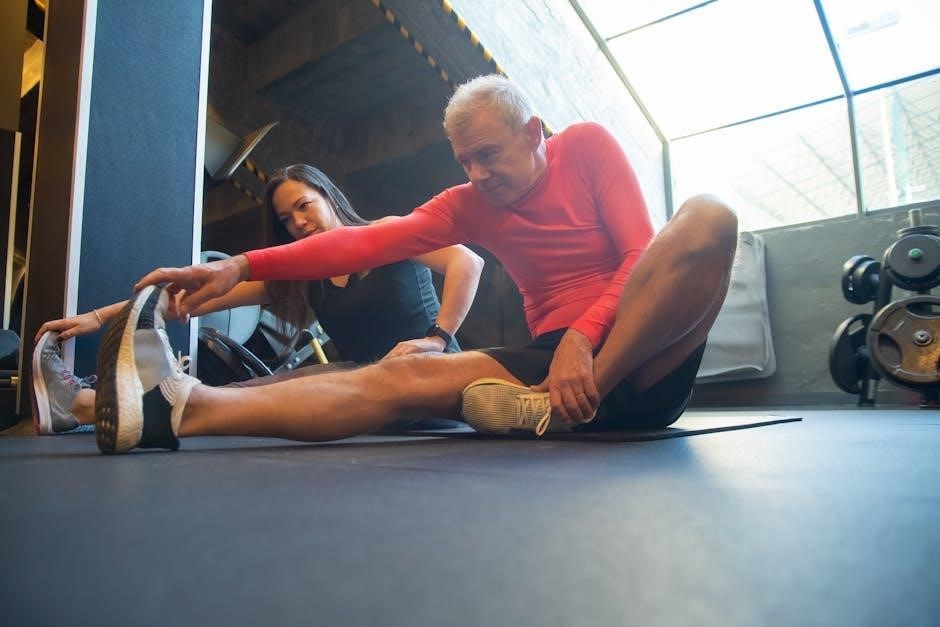
Dynamic and static stretching were integral parts of his routine‚ enhancing flexibility‚ range of motion‚ and preventing muscle imbalances. These exercises‚ frequently outlined in training PDFs‚ were performed both before and after workouts to prepare the body and promote recovery.
Analyzing Bolt’s Training Adaptations
PDF analyses reveal Bolt’s program emphasized progressive overload and periodization‚ tailoring intensity and volume to peak for major championships effectively.
Progression and Periodization
Usain Bolt’s training wasn’t static; PDF resources detailing his regimen highlight a meticulously planned progression and periodization strategy. Early in the training cycle‚ the focus was on building a strong base with higher volume‚ lower intensity work – foundational strength and conditioning‚ alongside general physical preparation.
As competitions neared‚ the program shifted towards increased intensity and reduced volume‚ prioritizing speed development and race-specific drills. This periodization involved distinct phases: preparation‚ pre-competition‚ competition‚ and transition.
PDF breakdowns show a clear emphasis on peaking for major events like the Olympics and World Championships‚ carefully managing fatigue and maximizing performance when it mattered most. The progression wasn’t linear‚ incorporating deload weeks to allow for recovery and adaptation‚ preventing overtraining and ensuring Bolt remained at his peak.
Individualization of the Program
While PDF resources outline core components of Usain Bolt’s training‚ it’s crucial to understand his program wasn’t a one-size-fits-all approach. It was highly individualized‚ tailored to his unique physiology‚ strengths‚ and weaknesses. His coaches continuously monitored his response to training‚ adjusting volume‚ intensity‚ and exercise selection accordingly.
PDF analyses reveal a focus on addressing Bolt’s specific needs – for example‚ strengthening areas prone to injury and refining his start technique. His training incorporated biomechanical analysis to optimize his running form and maximize efficiency.
Furthermore‚ the program considered his recovery capabilities and mental state‚ ensuring he was physically and psychologically prepared for competition. Any attempt to replicate his program must acknowledge this individualization‚ adapting it to personal characteristics.

Finding Usain Bolt Training Program PDFs
Numerous online resources claim to offer Usain Bolt’s complete training program in PDF format‚ but verifying their authenticity and accuracy is essential.
Reliable Sources for Training Information
Locating genuinely insightful information about Usain Bolt’s training necessitates careful source evaluation. While complete‚ official training PDFs are scarce‚ several avenues provide valuable details. Look to publications from reputable sports science journals and books authored by coaches directly involved with Bolt’s team‚ like Glen Mills.
Websites of established athletic organizations‚ such as World Athletics or national governing bodies for track and field‚ often feature articles or analyses based on Bolt’s methodologies. Interviews with Bolt himself and his support staff‚ available through credible sports news outlets‚ can offer firsthand insights.
Be wary of blogs or forums presenting themselves as definitive sources without clear attribution or expert backing. Prioritize information grounded in scientific principles and practical coaching experience‚ rather than anecdotal claims or sensationalized accounts. Remember‚ replicating Bolt’s success requires a holistic approach‚ not just a copied workout.
Caution Regarding Unverified PDFs
The internet abounds with purported “Usain Bolt training program” PDFs‚ but exercising extreme caution is crucial. Many are created by individuals lacking the qualifications to design elite-level athletic training‚ potentially leading to ineffective or even harmful routines. Unverified programs may lack proper progression‚ periodization‚ or individualized adjustments.
Downloading PDFs from unknown sources carries the risk of malware or viruses. Furthermore‚ these programs often oversimplify Bolt’s complex training‚ neglecting the crucial role of his genetics‚ coaching expertise‚ and comprehensive support team.
Remember that Bolt’s training was highly personalized and evolved over time. A static PDF cannot replicate this dynamic process. Prioritize information from trusted sources and consult with a qualified coach before implementing any new training regimen to ensure safety and effectiveness.